
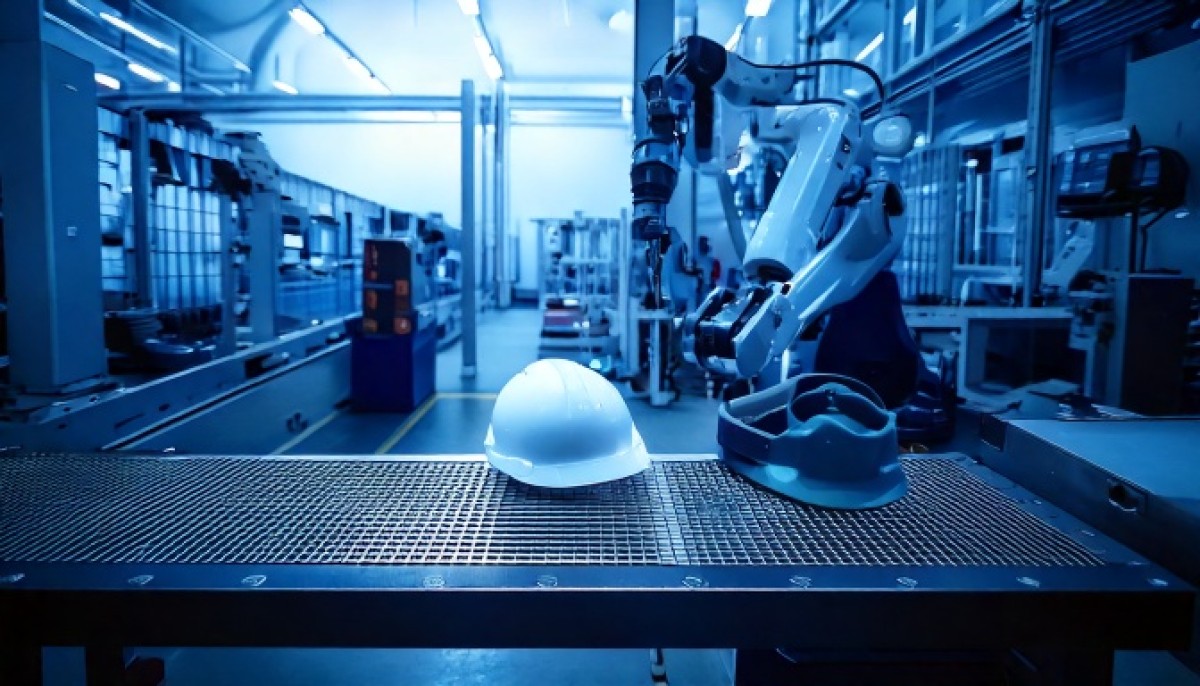
It’s the question underneath every headline about robots and AI: is my job next? You deserve a straight answer rather than either “everything’s fine” or “we’re all doomed.” Here’s an honest, 2026 look at what automation is actually doing to work — which jobs are most and least exposed, what history tells us, and what’s genuinely worth doing about it.
This is a companion to our pillar, how AI and robotics are quietly automating the world — start there for the big picture on dark factories.
The honest answer: it’s about tasks, not job titles
The most useful way to think about this isn’t “will my job be automated” but “which of my tasks can be automated.” Almost every job is a bundle of tasks; automation tends to eat the repetitive, predictable ones first and leave the rest. So most roles don’t vanish overnight — they get reshaped, sometimes drastically, as the routine parts get handed to machines and the human keeps the judgment, relationships, and edge cases.
That reframing matters, because it points at the real risk and the real opportunity: the parts of your work that are routine are exposed; the parts that need judgment, dexterity in messy environments, trust, or creativity are far more defensible.
Most exposed
- Routine physical work in predictable settings — assembly, packing, sorting, basic warehouse roles — exactly the work dark factories are built to absorb.
- Routine information work — data entry, basic bookkeeping, simple report generation, first-line scripted support — where AI software is now very capable.
- Predictable driving and movement in controlled environments, as autonomous systems mature.
Most defensible (for now)
- Skilled trades and hands-on work in unpredictable settings — plumbing, electrical, repair, care work — where every job site is different and dexterity in mess is hard to automate.
- Work built on trust and relationships — negotiation, complex sales, caregiving, teaching, leadership.
- Genuinely creative and strategic work — not “produce content,” which AI assists, but taste, direction, and original problem-solving.
- Jobs that build, maintain, and oversee the machines — robotics, automation engineering, and the supervisory roles a dark factory still needs.
What history says (the reassuring part)
Every major wave of automation — the mechanical loom, the assembly line, the computer — destroyed categories of work and, over time, created new ones, usually more than it erased. The fear that “the machines will take all the jobs” is centuries old, and so far it’s always been wrong in the long run. There’s real comfort in that pattern.
What’s different this time (the part to take seriously)
Two things. First, speed: previous transitions played out over generations; this one is compressing into years, which gives workers less time to adapt. Second, breadth: because modern AI can perceive, adapt, and handle language, it reaches into both physical and cognitive work at once, rather than one sector at a time. The long-run history is reassuring; the short-run disruption for specific people and towns is still very real — which is exactly the human story While You Were Sleeping follows.
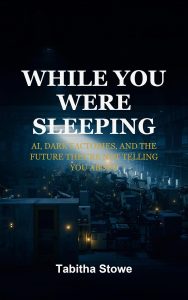
The book behind this story: While You Were Sleeping
Tabitha Stowe’s gripping look at AI, automation, and the dark factories quietly replacing workers — told through the people of a town called Millhaven.
How exposed is your job? A 5-question self-check
You can gauge your own exposure honestly by asking how much of your week looks like the things machines do well. Count a “yes” for each:
- Is most of my work routine and predictable — similar tasks, done a similar way, most days?
- Does it happen in a controlled, consistent environment (a screen, a line, a desk) rather than messy, varied settings?
- Is it mostly processing information or moving objects, rather than building trust or making judgment calls?
- Could a clear set of rules or steps describe most of what I do?
- Do I rarely handle genuine exceptions, ambiguity, or people problems?
More yeses means more of your tasks are automatable — not that you’ll be replaced tomorrow, but that it’s worth steering toward the harder-to-automate parts of your work now, while you still have time and leverage to do it on your own terms.
What reskilling actually looks like in 2026
“Learn new skills” is useless advice without specifics. In practice the highest-leverage moves are concrete: get genuinely fluent with the AI tools in your own field so you’re the person who makes them useful, not the person they replace; deepen the human side of your role — clients, judgment, leadership — that machines can’t touch; or pick up a hands-on or technical skill in an area automation actually creates demand for, like maintaining and overseeing the systems themselves. None of this requires going back to school for years. It requires pointing your next few months of effort at defensible work on purpose.
What to actually do about it
- Move up the task ladder. Within your own role, deliberately shift your time toward the judgment, relationship, and creative tasks machines can’t easily take — and let AI handle the routine parts.
- Learn to direct the tools, not race them. The people who thrive aren’t the ones competing with AI; they’re the ones who got good at using it. That skill is a moat.
- Build something you own. The single best hedge against automation is an income that isn’t a single employer’s to cut. The same AI displacing jobs makes it dramatically cheaper to start a one-person business — see AI tools and courses for side-hustlers, making money with digital products, and running an Etsy shop with AI.
The bottom line
Will AI and robots take your job? Probably not your whole job, not all at once — but they will keep automating the routine parts of it, faster than past transitions and across more of the economy. The winners won’t be the people who ignored it or panicked; they’ll be the ones who moved toward defensible work, learned the tools, and built something of their own. For the full context, read our dark factories guide.
FAQ
Which jobs are safest from AI and robots?
Skilled hands-on trades in unpredictable settings, relationship- and trust-based roles, genuinely creative and strategic work, and the jobs that build and oversee the machines themselves.
How fast will this happen?
Unevenly. Some routine tasks are being automated now; others will take years. The safe assumption is steady erosion of routine work rather than a single overnight event.
Is it too late to prepare?
No — the tools are cheap and widely available, and the gap between people who use AI well and those who don’t is still wide open. Learning to direct the tools and building an income you own are both within reach today.
Leave a Reply