
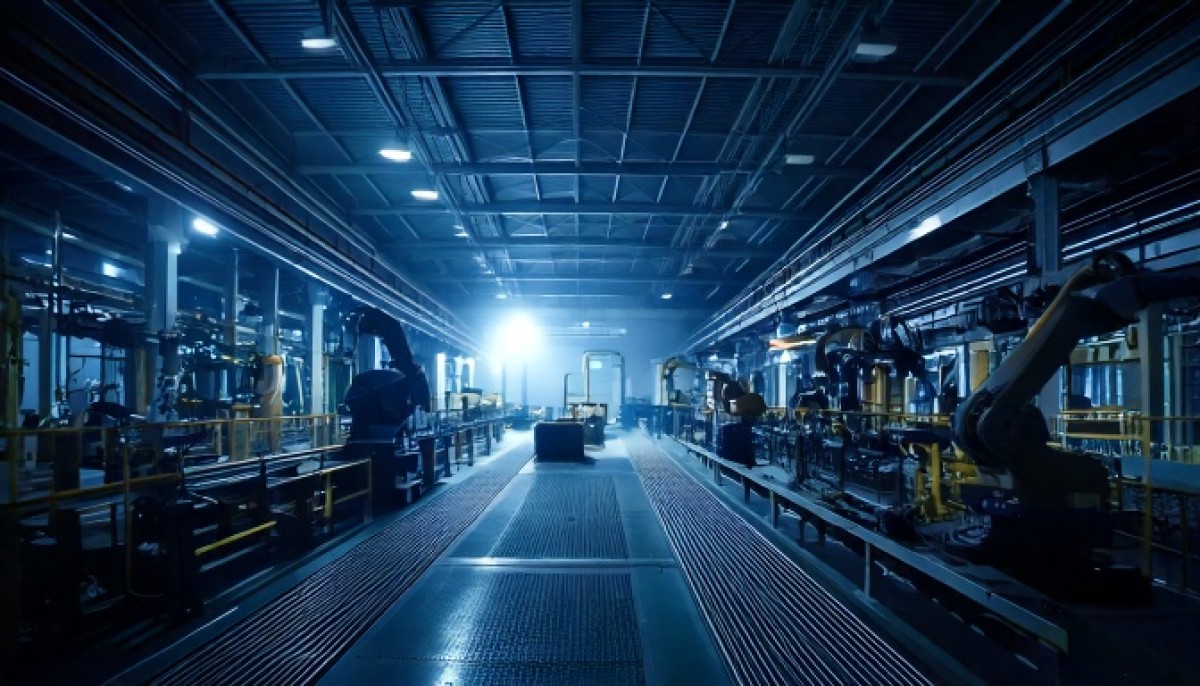
You’ve probably heard the phrase and pictured something out of a sci-fi film: a factory humming away in the pitch black, no people anywhere. That image is closer to the truth than you’d think — but the reality is more specific, and more interesting. Here’s exactly what a dark factory is, where the term comes from, and how close we really are to the lights-out future.
This is the deep-dive companion to our pillar guide, how AI and robotics are quietly automating the world.
The definition
A dark factory (or lights-out factory) is a manufacturing facility that can operate with no humans physically present on the production floor — and therefore with the lights, heating, and cooling for human comfort switched off. Every core step is handled by machines: feeding in materials, running the process, inspecting quality, and moving finished goods out.
The key word is can. A dark factory doesn’t have to run unattended every hour of every day; the point is that it’s capable of producing without people. Many run lights-out overnight or on weekends and bring in a small crew for changeovers and maintenance during the day.
Where the term comes from
“Lights-out manufacturing” is the older, more technical phrase — engineers used it for automated lines that didn’t need the lights on. “Dark factory” is the punchier version that caught on as the idea jumped from trade journals into the headlines. Both describe the same thing: production without a human presence.
The levels of automation (most factories aren’t fully “dark”)
It helps to think of a spectrum rather than a switch:
- Manual / assisted: people do the work, with tools and some machines helping.
- Partially automated: robots handle specific stations (welding, painting, packing) while people run the rest.
- Highly automated / “smart factory”: most of the line is automated and networked, with people supervising and stepping in.
- Lights-out / dark: the line can run start-to-finish with no one on the floor.
The vast majority of the world’s factories sit in the middle two stages. True dark factories are still the exception — but every year more lines cross from “highly automated” into “can run in the dark.”
What it takes to turn the lights off
For a line to run without people, machines have to cover the jobs human senses and judgment used to do:
- Robotic arms and machines to physically do the work — now dexterous enough for variable, delicate tasks.
- Machine vision so the system can “see” — positioning parts, reading codes, and catching defects without a human inspector.
- Sensors everywhere feeding temperature, vibration, and position data back to the controller.
- AI software to make decisions, optimize throughput, and flag a machine that’s about to fail before it stops the line.
- Autonomous mobile robots (AMRs) to move materials and finished goods around the floor.
Real examples
Lights-out manufacturing isn’t hypothetical. Robotics maker FANUC has run operations with robots assembling robots for long unattended stretches; Xiaomi has shown off a Beijing “dark factory” it says builds smartphones with minimal human involvement; and warehouses run by the likes of Amazon increasingly move goods with fleets of autonomous robots. None is a perfect human-free plant in every detail — but together they prove the model works.
What a lights-out shift actually looks like
Picture an overnight run. Before the day crew leaves, they stage the raw materials and confirm the schedule. Then the floor empties and the lights go down. Through the night, autonomous mobile robots ferry materials to each station; robotic arms do the work; machine-vision cameras inspect every piece and quietly reject the few that fail. Sensors stream temperature and vibration data to a controller that nudges settings to keep quality steady.
If something goes wrong, the line doesn’t call a person on the floor — there isn’t one. It logs the exception, and if it can’t resolve the problem itself, it sends an alert to an on-call technician’s phone. By morning the crew walks in to finished output, a dashboard of everything that ran, and a short list of anything that needs a human eye. That’s lights-out manufacturing in practice: not a magic empty building, but a tightly choreographed system that only needs people for setup, maintenance, and the genuinely unexpected.
The jobs that remain in a dark factory
“No one on the floor” doesn’t mean no one employed. A dark factory shifts the workforce rather than deleting it: maintenance technicians who keep the machines running, robotics and automation engineers who program and improve the lines, control-room operators who monitor everything remotely, and process and quality engineers who design and refine what the system makes. There are usually far fewer of these roles than the manual jobs they replace, and they call for different skills — which is precisely the worker story that makes this shift so consequential.
Why isn’t every factory dark yet?
Three honest reasons. First, cost: full automation is a big upfront investment that only pays off at scale or with steady, high-volume products. Second, flexibility: humans are still better at one-off problems and frequent product changes, so low-volume or highly custom work resists automation. Third, edge cases: the last 5% — the weird jam, the snapped part, the unexpected — is where machines still struggle, and handling it reliably is hard. Closing that last gap is exactly where today’s AI and robotics are pushing.
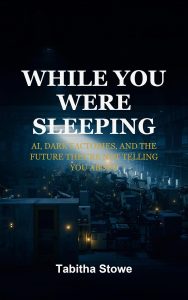
The book behind this story: While You Were Sleeping
Tabitha Stowe’s gripping look at AI, automation, and the dark factories quietly replacing workers — told through the people of a town called Millhaven.
The takeaway
A dark factory is the logical endpoint of automation: production that needs no one on the floor. We’re not all the way there — but lights-out sections are already common, and the line between “heavily automated” and “genuinely dark” is thinning fast. To see what that means for jobs and for you, read will AI and robots take your job? and the full picture in our dark factories guide.
FAQ
Does a dark factory really run with no lights?
That’s the idea — if no one’s on the floor, there’s no reason to light it for human eyes. In practice many run lights-out in shifts (overnight, weekends) rather than literally 24/7.
Is a dark factory the same as a smart factory?
Not quite. A “smart factory” is highly automated and connected but usually still has people. A dark factory can run with nobody on the floor at all — it’s the further end of the same spectrum.
What products are made in dark factories?
High-volume, standardized goods are the best fit — electronics, components, and parts where the same thing is made over and over. Custom or low-volume work is much harder to fully automate.
Leave a Reply