
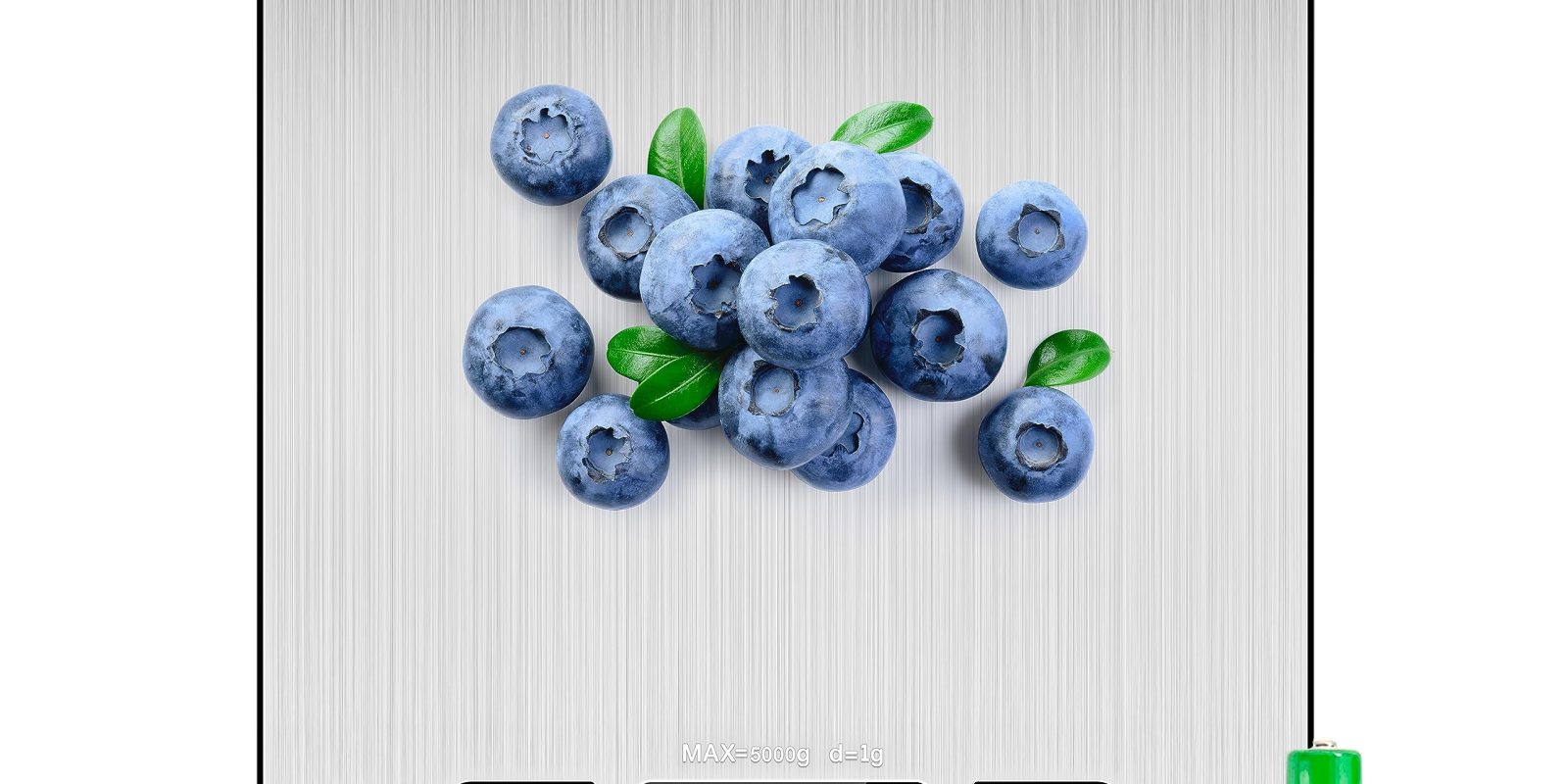
If you have ever followed a sourdough recipe that said “1 cup of flour” and ended up with a soupy mess one week and a brick the next, the problem usually was not your technique. It was your measuring. A good kitchen scale for sourdough is the single piece of equipment that turns baking from guesswork into something repeatable. Flour settles, scoops compact, and a “cup” can vary by 20 percent or more depending on how you fill it. Weight does not lie. Once you start baking by grams, your loaves get more consistent almost overnight, and you finally understand what your recipe is actually telling you to do.
Why a kitchen scale for sourdough is basically non-negotiable
Sourdough runs on ratios, and ratios only work when you measure by weight. The most important number in any recipe is hydration, the weight of water relative to the weight of flour. A dough at 70 percent hydration has 700g of water for every 1000g of flour. That percentage controls how slack or stiff your dough feels, how open the crumb gets, and how the loaf handles during shaping. You cannot dial in hydration with measuring cups, because volume and weight do not track each other cleanly, especially with flour.
Your starter lives by weight too. When you feed it, you are working with a ratio like 1:1:1, meaning equal parts existing starter, flour, and water by weight. Want to build more for a big bake? A 1:2:2 or 1:5:5 feed stretches a small amount of starter into a larger, more vigorous population. None of those ratios mean anything in cups. The whole framework of “baker’s math,” where every ingredient is expressed as a percentage of the flour weight, exists precisely because weight is the only unit that stays honest across different flours, humidity levels, and batch sizes.
How to actually use the scale for starter and dough
The feature that makes a scale genuinely pleasant to use is the tare button (sometimes labeled “zero”). Tare resets the displayed weight to zero with a container already on the platform, so you can add ingredients one at a time into the same jar or bowl without doing any subtraction in your head.
Feeding your starter becomes a three-step rhythm:
- Put your jar on the scale and press tare. Scoop in the amount of starter you want to keep, say 30g.
- Press tare again so it reads zero. Add 30g of flour.
- Press tare once more and pour in 30g of water. Stir, and you have done a clean 1:1:1 feed in one jar with nothing else to wash.
Building a levain works the same way, just with whatever ratio your recipe calls for. Mixing the final dough is identical in spirit: set your mixing bowl on the scale, tare, add flour to the target weight, tare, add water, tare, add starter and salt. Every ingredient lands in one bowl and you never lose track of where you are. This is why the tare button matters more than almost any other spec; a scale without a responsive, reliable tare turns every feed into a chore.
What to look for in a scale
You do not need anything exotic. The features that actually matter for bread are short and specific:
- Grams, clearly displayed. Make sure it switches to grams and that the readout is easy to see when a bowl is blocking part of the platform.
- A good tare button. Responsive, and it should re-zero cleanly without lag or drift between additions.
- Capacity around 5kg. A full batch of dough plus a heavy mixing bowl can easily push past 3kg, so a 5kg ceiling gives you comfortable headroom. Staying well within capacity also keeps readings accurate.
- 1g graduation is plenty. For flour and water, resolving down to the gram is all you need.
- Maybe 0.1g, if you weigh salt or tiny amounts. A 0.1g scale is nice when you are measuring small quantities of salt or a few grams of starter, but it is genuinely optional. Plenty of excellent bakers work fine at 1g resolution.
Beyond the numbers, set the scale on a flat, stable surface. Scales rely on load cells that assume an even platform, and a wobbly or tilted counter will throw your readings off. A compact, washable design helps too, since flour and starter get everywhere.
For most home bakers, a simple, accurate model like the Etekcity Food Kitchen Scale covers everything sourdough asks of it: grams, a quick tare, and enough capacity for a real batch. If you want to compare a few options side by side, our pillar guide to The Best Kitchen Scales of 2026 breaks down where it pays to spend more and where it does not.
A worked example: hydration math in practice
Let’s make this concrete. Say you want a single loaf using 500g of bread flour at 75 percent hydration, with 2 percent salt, and you are adding 100g of starter. Here is how baker’s math fills in the rest:
- Flour: 500g. This is your baseline, the “100 percent” everything else is measured against.
- Water: 375g. That is 75 percent of 500g (500 × 0.75 = 375). On the scale, tare your bowl, add 500g flour, tare, then pour to 375g of water.
- Salt: 10g. Two percent of 500g (500 × 0.02 = 10). This is where a 0.1g scale can be reassuring, though 10g is easy to hit at 1g resolution.
- Starter: 100g. A 1:1:1 starter is half flour and half water by weight, so if you are being precise, those 50g of flour and 50g of water count toward your true totals. Many bakers ignore this for everyday loaves and only account for it when chasing a very specific hydration.
Now you can change one number and predict the result. Want a wetter, more open crumb? Bump water to 400g for 80 percent hydration. Want a tighter, easier-to-handle dough? Drop to 350g for 70 percent. Because everything is anchored to flour weight, you can scale the whole recipe up for two loaves simply by doubling each gram figure, and the dough will behave the same way. That predictability is the entire payoff of weighing.
A scale will not make your bread for you, but it removes the biggest source of random failure in sourdough. Buy one that reads in grams, tares reliably, and handles a full batch, set it on a level counter, and start treating your recipes as ratios instead of lists.
Affiliate note: if you buy through links here we may earn a small commission, at no extra cost to you. It never changes our picks.
Leave a Reply