
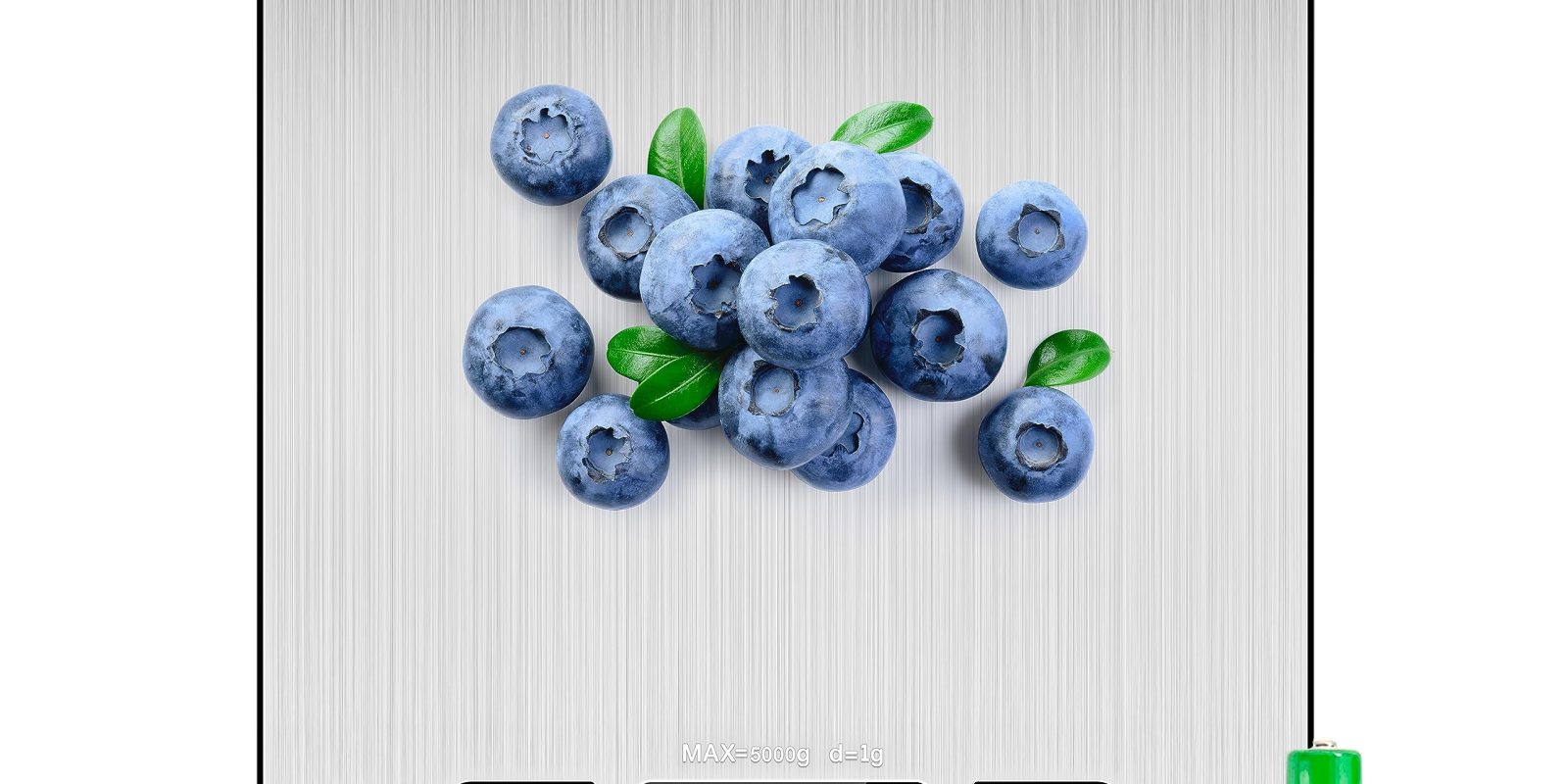
If you’ve ever tried to lose weight by “watching your portions,” you already know how slippery that can be. A handful of nuts becomes three handfuls. A tablespoon of peanut butter turns into a heaping spoonful that’s closer to four. The gap between what we think we’re eating and what we’re actually eating is where a lot of well-meaning plans quietly fall apart. A kitchen scale for weight loss doesn’t fix that on its own, but it does something genuinely useful: it replaces guessing with a number. And once you can see the number, you can work with it.
Why eyeballing portions almost always fails
The problem isn’t willpower or attention. It’s that human eyes are simply bad at estimating volume and weight, especially for calorie-dense foods. Oils, nut butters, cheese, granola, pasta, and dressings are easy to underestimate because a small change in amount means a big change in calories. People routinely pour, scoop, and serve more than they realize, and the error compounds across a day and a week.
Measuring cups help a little, but they measure volume, not weight, and they’re inconsistent for anything that packs or piles. Is your cup of rice loosely spooned or pressed down? Is that “one chicken breast” four ounces or nine? Eyeballing turns every meal into a small unanswered question. Weighing your food answers it.
How a scale makes calorie and macro tracking accurate
Here’s the part that makes a scale click for tracking: nutrition labels are written in the same units a scale reads. Most labels list values per 100 grams or per serving, and a good scale shows grams and ounces directly. That means the number on your scale maps cleanly onto the number on the package or in your food-tracking app.
Say a label reads 120 calories per 100g. You weigh your portion and it’s 150g. The math is simple and honest: 150 is 1.5 times 100, so that’s 180 calories. No estimating, no rounding up your hopes. The same approach works for protein, carbs, and fat, which is why people tracking macros tend to lean on a scale, too. When your inputs are accurate, your daily totals actually mean something, and you can adjust based on reality instead of a vague feeling.
The other small feature that matters here is the tare button. Tare resets the scale to zero with a container or plate already on it, so you can weigh food directly on the dish you’re eating from. Put your plate down, hit tare, add the chicken, note the weight, hit tare again, add the rice, note that weight. One plate, no extra bowls, no mess. It turns weighing from a chore into a five-second habit.
A simple weigh-and-log workflow
You don’t need a complicated system. A repeatable one beats a perfect one. Here’s a workflow that’s easy to stick with:
- Set the units first. Switch the scale to grams if your labels or app use grams (most do). Consistency between scale and label is what keeps the math clean.
- Tare your plate or bowl. Place the empty dish on the scale and press tare so it reads zero.
- Add one food at a time. Weigh each component, note the grams, then tare again before adding the next. This keeps every item separate without dirtying more dishes.
- Log it right away. Enter the weight into your tracker before you eat, while the number is in front of you. Logging after the fact is where accuracy slips.
- Weigh the high-impact stuff first. If you only weigh a few things, make them the calorie-dense ones: oils, nut butters, cheese, grains, and proteins. Lettuce and cucumber aren’t going to derail anyone.
After a week or two, you’ll start to recognize what 30g of cheese or 150g of cooked rice actually looks like. That’s the quiet payoff: the scale trains your eye, so even when you don’t have it handy, your estimates get a lot closer to the truth.
What to look for in a scale
You don’t need anything fancy or expensive for this. The features that matter are practical and cheap:
- Grams and ounces. Both units, easy to toggle, so it matches whatever your labels use.
- A tare button. Non-negotiable for weighing on a plate. Nearly every scale has one, but confirm it.
- 1-gram graduations. A resolution of 1g is plenty for food. You don’t need 0.1g precision unless you’re weighing espresso or supplements.
- An easy-to-read display. A clear, well-lit screen you can read with a full plate sitting on the platform.
- A flat, wipeable surface. Food gets messy. A simple flat top you can wipe down beats fussy bowls and crevices.
That’s genuinely the whole list. A basic model that nails these will serve you for years. If you want a closer look at the options and how they compare, we walk through them in The Best Kitchen Scales of 2026. A solid, affordable starting point that checks every box above is the Etekcity Food Kitchen Scale, which gives you grams, ounces, tare, and a clear display without overcomplicating things.
A scale is a tool, not magic
Here’s the honest part. A kitchen scale won’t lose the weight for you, and it isn’t a verdict on whether you’re “good” or “bad” at eating. It’s a measuring instrument, like a tape measure or a thermometer. All it does is give you accurate information. What you do with that information, and whether you can keep doing it, is what actually moves the needle.
Sustainable habits matter far more than any gadget. Sleep, stress, how much you move, how much protein and fiber you’re getting, and whether your meals are ones you genuinely enjoy will outweigh the precision of any single measurement. If weighing every bite starts to feel exhausting or obsessive, it’s completely fine to scale back, weigh only a few key foods, or step away entirely for a while. The goal is awareness and consistency, not perfection.
Used lightly, a scale is one of the most cost-effective tools you can own for understanding what you eat. It cuts through the guesswork, takes the drama out of portions, and quietly teaches you what real servings look like. Treat it as a helpful coach rather than a scorekeeper, and it can make the whole process feel a lot more manageable.
Affiliate note: if you buy through links here we may earn a small commission, at no extra cost to you. It never changes our picks.
Leave a Reply