
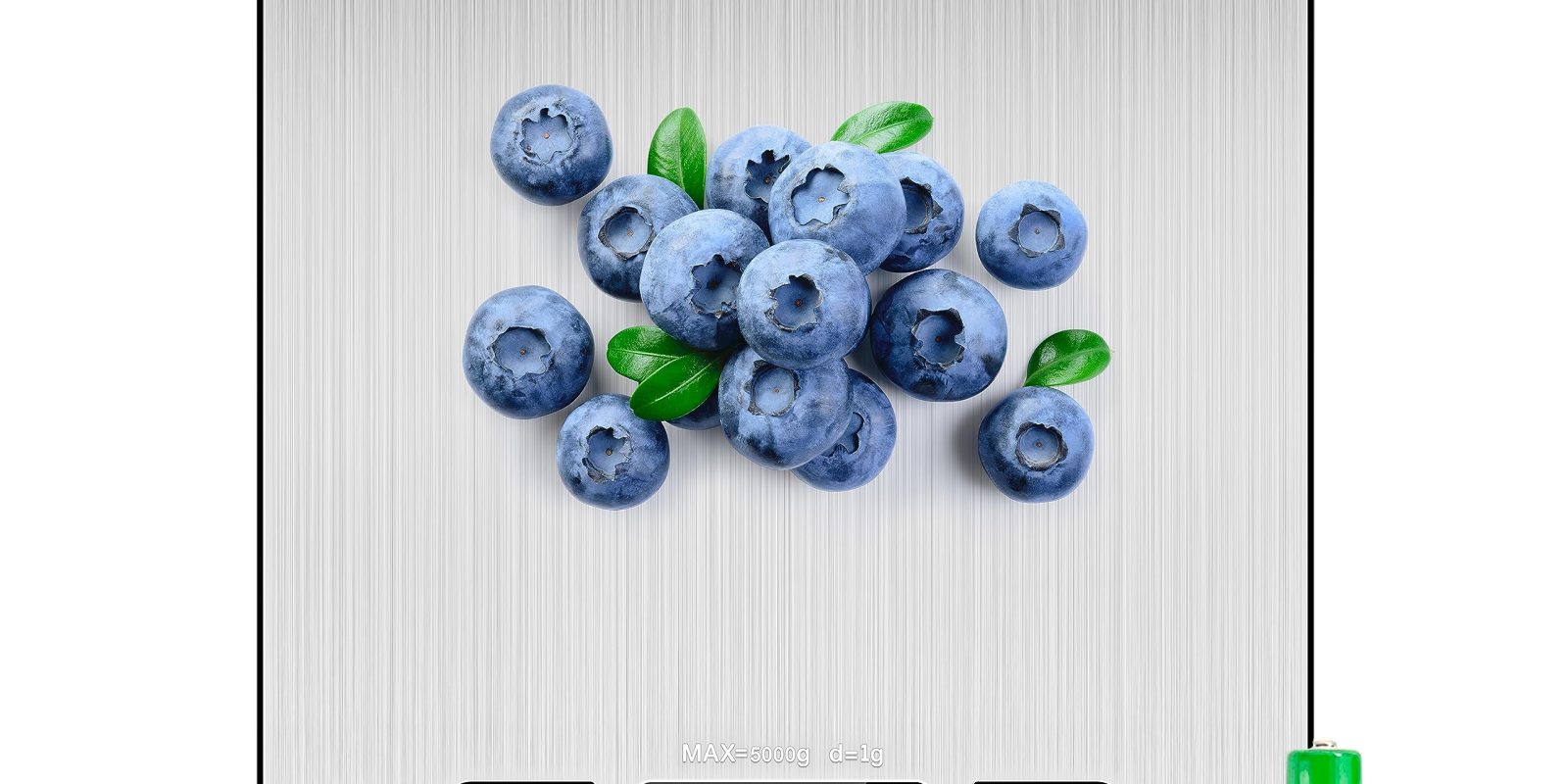
A digital kitchen scale might be the cheapest upgrade you can make to the way you cook. For around the price of a couple of coffees, it replaces the guesswork of measuring cups with something far more reliable: weight. Once you start weighing ingredients, your baking gets more consistent, your coffee gets better, and tracking what you eat suddenly becomes accurate. This guide covers what actually matters when you buy one, how precise you really need it to be, the different kinds of scales people confuse, and the scale we’d put on our own counter.
Why weigh your food instead of measuring it?
Volume lies. A “cup of flour” can vary by 20% or more depending on how it’s scooped and packed — which is exactly why two people following the same recipe get different results. Weight doesn’t have that problem: 120 grams of flour is 120 grams every time. That consistency is the whole reason serious bakers, coffee people, and anyone tracking macros reach for a scale.
It’s also just easier. With the tare (zero) button you can weigh every ingredient into a single bowl instead of dirtying a drawer full of cups and spoons. Less measuring, less cleanup, fewer dishes, and better results — it’s rare to get all four at once from a $15 gadget.
Kitchen scale vs. food scale vs. coffee scale vs. postal scale
These terms get tangled, so here’s the plain version. A kitchen scale and a food scale are the same thing — a general-purpose scale for ingredients, usually reading in 1-gram steps up to about 5 kg. A coffee scale is a kitchen scale tuned for brewing: finer 0.1-gram precision, a built-in timer, faster response, and often some water resistance. A postal or shipping scale is built for packages — higher capacity, coarser precision, and not meant for food. For cooking and baking, a standard kitchen/food scale is what you want; only step into coffee-scale territory if you’re serious about espresso.
What to look for in a kitchen scale
- Units: grams and ounces at minimum; milliliters and fluid ounces are handy for liquids. Grams are the most precise everyday unit.
- Tare / zero button: non-negotiable. It subtracts the weight of your bowl so you only weigh what you add — and lets you weigh several ingredients in one container.
- Capacity and graduation: a max capacity around 5 kg (11 lb) covers almost any home task; 1-gram graduation is plenty for cooking and baking.
- Platform size: big enough to balance a mixing bowl without tipping, small enough to store in a drawer.
- Readable display: a backlit screen you can read with a bowl sitting over it saves a lot of squinting.
- Power and build: most run on batteries (keep spares); a wipe-clean surface matters since this lives near flour and spills.
- Auto-off timing: convenient for battery life, but an aggressive auto-off that shuts down mid-recipe is genuinely annoying — longer is better.
How precise do you actually need?
This is where people overspend. For everyday cooking and baking, a 1-gram graduation is all you need — the difference of a gram of flour doesn’t matter. Step up to a 0.1-gram scale only if you’re dialing in espresso or weighing very small amounts, where a single gram is a meaningful share of the total. And a true milligram scale is overkill unless you’re measuring supplements or spices by the fraction of a gram. Most kitchens are perfectly served by a good 1-gram scale, and paying more for precision you’ll never use is the most common kitchen-scale mistake.
Our top pick: the Etekcity Food Kitchen Scale
For most kitchens, we’d start with the Etekcity Food Kitchen Scale. It nails the fundamentals that matter: clean readings in grams and ounces (plus milliliters and fluid ounces for liquids), a reliable tare button, a compact footprint that disappears into a drawer, and a surface that wipes clean in seconds. It’s inexpensive, which is exactly why it’s an easy first scale or a no-fuss replacement — you get the accuracy without paying for precision you won’t use. See the full breakdown and current price →
How to start using a kitchen scale (in 3 steps)
- Zero the bowl. Set your mixing bowl on the scale, choose grams, and press tare so it reads 0 — now you’re only weighing what goes in.
- Weigh, then tare again. Add the first ingredient to the target weight, press tare to return to 0, and add the next. The whole recipe goes into one bowl.
- Switch units for liquids. Toggle to milliliters or fluid ounces when a recipe calls for them — for water-based liquids, 1 ml weighs about 1 gram.
What you’ll actually use it for
- Baking — weighing flour and sugar is the single biggest upgrade to consistent results.
- Sourdough — hydration and starter ratios are weight-based math; a scale is practically required.
- Coffee — weighing your dose and water makes every cup repeatable, and a kitchen scale handles drip and pour-over just fine.
- Weight loss and macros — weighing portions makes calorie and macro tracking genuinely accurate instead of a guess.
We dig into each of these in the supporting guides linked throughout this series.
Keeping it accurate
A kitchen scale needs almost no maintenance, but a few habits keep it honest: use it on a flat, level surface; replace the batteries when readings start to drift; don’t exceed its capacity; and if your model supports calibration, recheck it with a known weight now and then. Common mistakes that throw off a reading are easy to avoid — weighing on an uneven counter, leaning on the surface while you pour, forgetting to tare, or overfilling past capacity. Treated well, a good scale stays accurate for years.
Frequently asked questions
Do I need a scale that reads to 0.1 grams? Only for espresso or very small amounts. For everyday cooking and baking, a 1-gram scale is plenty.
Can a kitchen scale weigh liquids? Yes — switch it to milliliters or fluid ounces. For water-based liquids, 1 ml weighs about 1 gram, so grams and milliliters line up.
Is a kitchen scale the same as a food scale? Yes — the two terms describe the same general-purpose ingredient scale. A coffee scale is the more specialized cousin, with finer precision and a timer.
Is a kitchen scale worth it if I don’t bake? If you make coffee, track what you eat, or want repeatable results, yes. If you only cook by feel from cup-based recipes, you may use it less — though at this price the downside is small.
Affiliate note: if you buy through links in this guide we may earn a small commission, at no extra cost to you. It never changes our picks.
Leave a Reply