
The good news up front: ceramic nonstick plays nicely with both gas and glass-top stoves, so you’re not locked out of either. But the kind of ceramic set you should buy shifts a little depending on what you’re cooking on. A flame and a smooth radiant surface ask different things of a pan, and getting it wrong means scorched handles on one side or scratched glass on the other. If you’re shopping for ceramic cookware for gas stove use, or for a glass/ceramic top, here’s how to match the pan to the burner — and the care habits that keep both happy.
Why your stovetop changes what to buy
A gas burner throws an open flame that wraps up and around the sides of a pan. A glass or ceramic top (that’s radiant electric, the smooth black surface) heats by pressing a flat element against a flat pan and transferring heat through contact. Those are fundamentally different jobs. Gas rewards a stable base and handles that can take side heat; glass tops reward a perfectly flat, smooth bottom and a pan that won’t scratch or crack the surface. A set built thoughtfully will cover both — but it helps to know exactly what you’re looking for.
Buying ceramic cookware for a gas stove
Gas is forgiving in one big way — it heats fast and you can see exactly how much flame you’re giving the pan. The trade-off is that the flame doesn’t stay politely under the base. It licks up the sides, which means heat reaches places a glass-top pan never has to worry about. A few things matter most here:
- A flat, stable base. On grates, a warped or rounded bottom rocks and heats unevenly. A heavy, flat base sits steady and spreads heat so your eggs don’t cook in a hot ring while the center stays pale.
- Stay-cool, heat-resistant handles. Because flames climb the sides, the handle can get hot — especially if you crank the burner wider than the pan. Look for sturdy, riveted stainless steel handles rated for higher heat rather than plastic that can soften or scorch over a flame.
- Flame management. Keep the flame under the base, not flaring up the sides. A flame sized to the pan heats more efficiently, protects the handle, and is gentler on the ceramic coating, which is happiest at low to medium heat anyway.
Buying ceramic cookware for a glass or ceramic top
Glass tops look sleek and clean up easily, but they’re pickier about the pans you set on them. Everything comes down to the bottom of the pan and how you handle it:
- A perfectly flat, smooth base. Radiant tops heat by direct contact, so any warp, ridge, or rough spot means poor heat transfer and frustrating hot spots. A smooth, flat bottom also matters for the glass itself — a rough base can leave gray marks or fine scratches over time.
- Lift, don’t slide. This is the single biggest habit for protecting a glass top. Dragging a pan across the surface — even to nudge it half an inch — is how scratches happen. Pick the pan up and set it down instead of sliding it.
- Mind the weight. Very heavy pans (think a fully loaded cast-iron Dutch oven) put real stress on glass, and a hard set-down or a drop can crack it. Mid-weight ceramic-coated aluminum hits a nice sweet spot: heavy enough to sit flat and heat evenly, light enough not to threaten the surface.
What to look for in a set that suits both
If you have gas now but might move to a glass top later — or you cook on both across two homes — buy for the overlap. The features that serve a glass top (flat, smooth, mid-weight base) also happen to serve gas well, and stainless handles that survive a flame are never a downside on electric. Prioritize:
- A thick, flat base that sits dead level on both grates and glass.
- Stainless steel, riveted handles rated for oven and stovetop heat.
- A coating that’s happy at low to medium heat — which is where ceramic performs best regardless of burner.
- Multi-stovetop compatibility stated by the maker, so you’re not guessing. The widest-compatibility sets list gas, electric, ceramic, and induction together.
For a fuller breakdown of how to judge a set pan by pan, our Best Ceramic Cookware Sets in 2026 guide walks through construction, coatings, and what’s worth paying for.
Our versatile pick for mixed stovetops
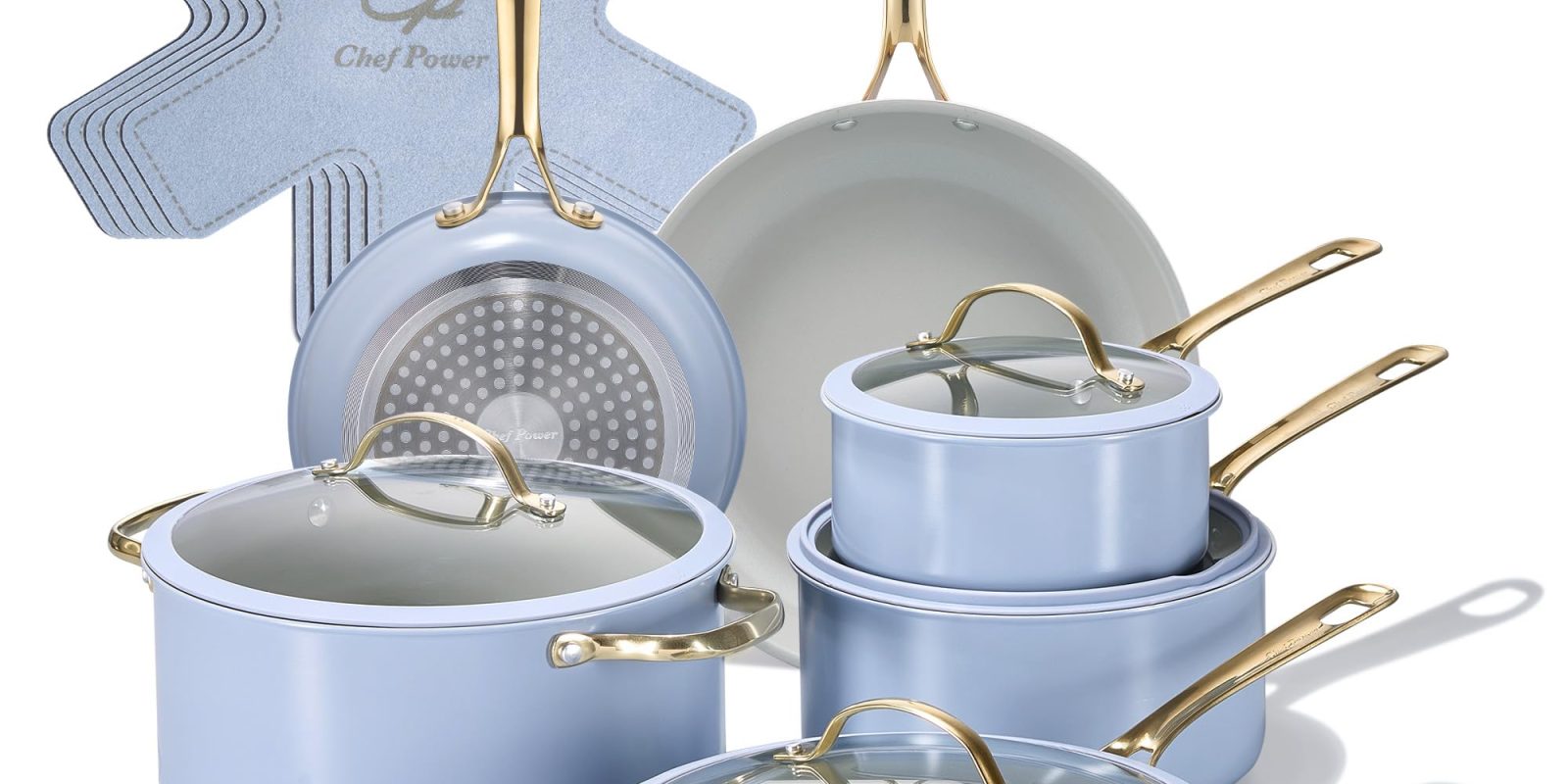
If you want one set that doesn’t make you think about your burner type, the Chef Power 15-Piece Ceramic Set is the one we point people to. It’s rated for gas, electric, ceramic, and induction, so it covers essentially every stovetop you’re likely to own. The flat bases sit steady on gas grates and make clean contact on a glass top, the stainless handles take side-flame heat without complaint, and the mid-weight build is forgiving on a radiant surface. For a household with one stove now and no idea what the next kitchen will have, that “works on everything” flexibility is the practical win.
Care tips that apply across every stovetop
The pan matters, but habits decide how long a ceramic set keeps its easy release. These hold true whether you cook on a flame or glass:
- Stay at low to medium heat. Ceramic doesn’t need high heat to perform, and high heat is the fastest way to wear out the coating. On gas, that means a modest flame; on glass, a mid setting.
- No metal utensils. Wood, silicone, or nylon only — metal scratches the ceramic and shortens its life.
- Skip aerosol cooking sprays. They leave a sticky residue that bakes onto the coating and kills its slickness. A thin film of oil or butter is far kinder.
- Let pans cool before washing, and hand-wash when you can even if the label says dishwasher-safe.
- On glass tops, always lift rather than slide, and wipe up spills once the surface cools so nothing bakes onto the glass.
- Retire any pan once the coating chips or stops releasing — that’s the end of its useful life on any stove.
Ceramic is one of the more stovetop-agnostic coatings out there, which is exactly why it’s such an easy recommendation for mixed kitchens. Match a flat, well-built set to good habits — moderate heat, soft utensils, lift-don’t-slide on glass — and the same pans will cook your weeknight eggs just as happily over a flame as on a smooth black top.
Affiliate note: if you buy through links here we may earn a small commission, at no extra cost to you. It never changes our picks.
Leave a Reply