
If you’ve gone looking for ceramic cookware made in USA, you’ve probably noticed how hard it is to get a straight answer. The honest version is this: truly US-made ceramic nonstick cookware is uncommon. The large majority of ceramic-coated pots and pans on the market are manufactured in Asia, especially China and South Korea, even when the company selling them is based in the United States. That doesn’t make a pan good or bad on its own, but it does mean the “made in America” angle is easy to oversell. Here’s how to read the labels, verify origin for yourself, and decide how much it should actually matter.
Is ceramic cookware made in the USA? The short answer
Most ceramic nonstick cookware is imported. The ceramic (sol-gel) coatings used on these pans, along with the aluminum or stainless bodies they’re applied to, are overwhelmingly produced overseas. A handful of US-based brands design their cookware here, partner with American chefs, or run their warehousing and customer support from the States, but that’s not the same as the pan being manufactured here. So if a set is labeled as US-made ceramic, treat it as the exception and verify it carefully rather than assuming it’s the norm.
It’s worth separating ceramic nonstick from cookware more broadly. There is meaningful US manufacturing in some categories, like certain cast iron, carbon steel, and stainless steel lines. Those are different products with different coatings (or no coating at all). When someone says “you can buy American cookware,” that’s broadly true, but it rarely points to ceramic nonstick specifically.
The marketing-language traps to watch for
This is where shoppers get tripped up. Under the FTC’s standard, an unqualified “Made in USA” claim means a product is “all or virtually all” made in the United States, including most of its component parts and processing. That’s a high bar, and it’s enforceable. The problem is that softer phrases are everywhere, and they sound similar without meaning the same thing:
- “Designed in USA” — the design or engineering may happen here, but the manufacturing usually doesn’t.
- “Assembled in USA” — components can be made abroad and put together domestically; this is a qualified claim, not full US manufacturing.
- “US-based company” or “founded in America” — describes the business, not where the product is built.
- “Veteran-owned,” “family-owned,” “small-batch” — nice to know, but says nothing about country of origin.
None of these are necessarily dishonest. They become a problem only when they’re used to imply domestic manufacturing that isn’t happening. If a listing leans hard on flag imagery and patriotic copy but never plainly states “Made in USA” in the FTC sense, that gap is usually the answer.
How to actually verify country of origin
You don’t have to take anyone’s word for it. A few minutes of checking will tell you more than any marketing page:
- Read the product packaging and the pan itself. Imported goods sold in the US are generally required to be marked with their country of origin. Look on the box, the underside of the pan, or the stamped base.
- Check the manufacturer’s own site, not just the retail listing. Look for a clear, unqualified manufacturing statement. If you only find “designed in” or “based in” language, take that at face value.
- Read the customer Q&A and reviews. On big retail sites, someone has almost always asked “where is this made?” and the answer (sometimes from the seller, sometimes from a buyer reading the box) is often right there.
- Ask the company directly. Email or message customer support and ask plainly: “Is this manufactured in the United States, and where exactly?” A confident, specific answer is reassuring; a vague or evasive one is its own kind of answer.
- Be skeptical of “USA” in a brand name. A company name or a marketing slogan that includes “USA” is not a country-of-origin claim.
Should country of origin drive your decision?
If buying domestically made goods matters to you for jobs, ethics, or supply-chain reasons, that’s a completely valid reason to prioritize it, and you should hold the seller to the FTC standard before paying a premium for the label. Just go in knowing your ceramic nonstick options will be limited, and verify rather than assume.
But if your real goal is a pan that cooks well and lasts, country of origin is not the most useful signal. Where a pan is made tells you very little about whether it’ll perform. For ceramic nonstick specifically, these factors tell you far more:
- Coating safety and certifications. Look for clear statements that the coating is free of PFAS/PTFE, PFOA, lead, and cadmium, ideally backed by recognizable third-party testing rather than vague reassurances.
- Construction. Even heat distribution, a comfortable handle, and an oven-safe temperature rating you’ll actually use.
- Honest expectations about lifespan. Ceramic coatings tend to lose their nonstick edge faster than the marketing suggests. How you care for the pan, low to medium heat, no metal utensils, hand washing, gentle oils, matters more to longevity than the factory it came from.
- Warranty and support. A responsive seller and a real warranty beat a flag on the box.
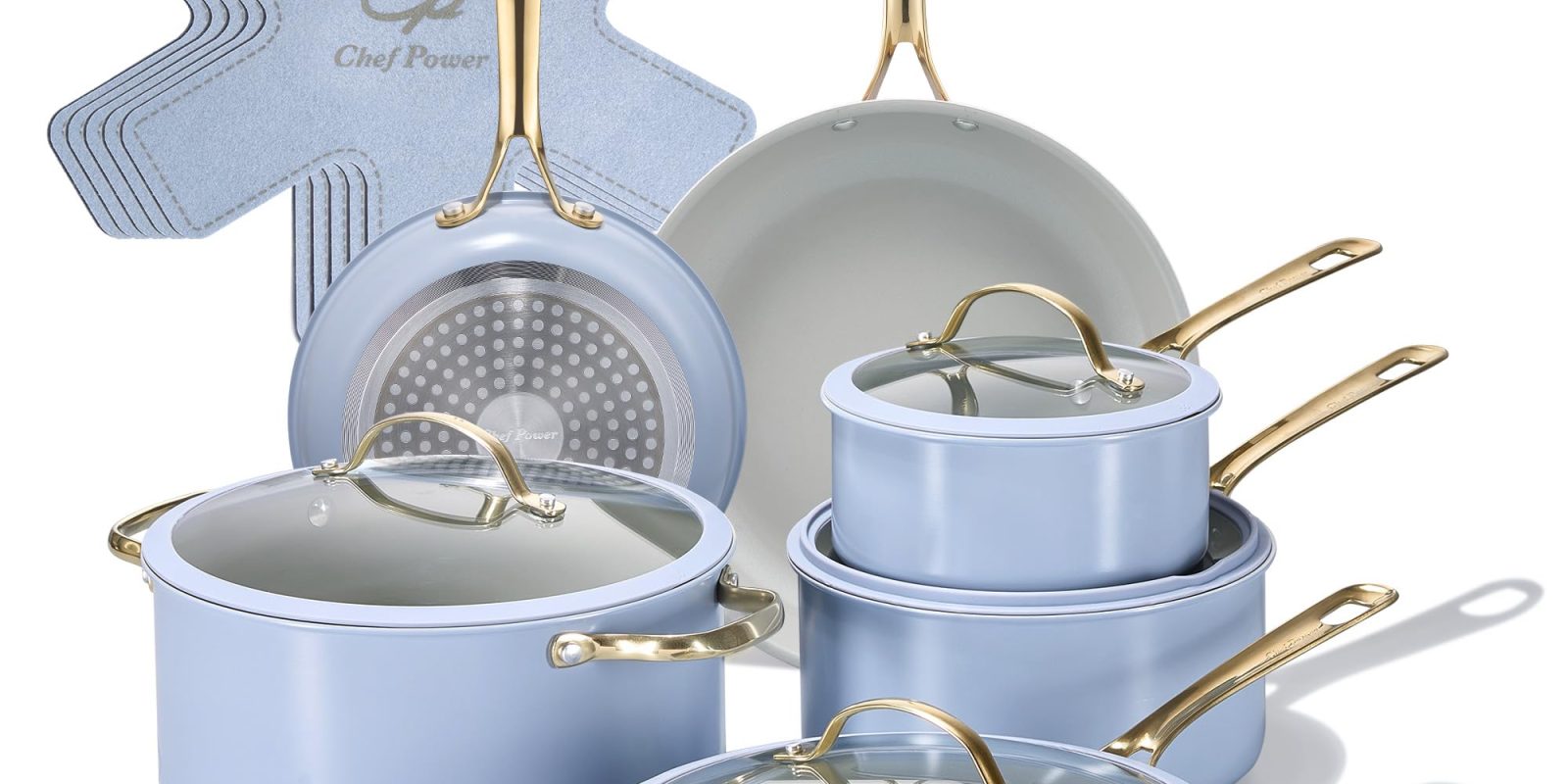
For a fuller breakdown of brands, coatings, and what holds up over time, see our Best Ceramic Cookware Sets in 2026 guide. And to be transparent about our own recommendation: our current top pick, the Chef Power 15-Piece Ceramic Set, is an affordable imported set. We’re not claiming it’s US-made. We picked it because it does the practical things well at a price that makes sense, which is exactly the point: judge the pan on how it cooks, not on the flag printed next to it.
Bottom line: if a US-made ceramic set genuinely exists and you’ve verified it, great. But don’t let patriotic packaging or “designed in USA” wording stand in for the manufacturing claim it’s hinting at. Check the origin yourself, weigh it honestly against coating safety, construction, and care, and buy the pan that earns its place in your kitchen.
Affiliate note: if you buy through links here we may earn a small commission, at no extra cost to you. It never changes our picks.
Leave a Reply