
The ceramic vs stainless steel cookware debate isn’t really about which one is “better” — it’s about which problems you want your pans to solve. These are two opposite tools. Ceramic is the forgiving, slippery surface that lets you cook an egg with barely any oil and wipe the pan clean afterward. Stainless steel is the near-indestructible workhorse that sears meat properly, builds flavor, and shrugs off a lifetime of abuse. Pick by how you actually cook, and you’ll be happy with either. Below is an honest, side-by-side look at where each one wins and where each one frustrates.
The core trade-off: ease vs. durability
Ceramic cookware is nonstick. Quality ceramic coatings are derived from sand and stone (a sol-gel process), and the good ones are free of PTFE, PFOA, PFAS, lead, and cadmium — which is a big part of their appeal if you’ve moved away from older nonstick. Food releases easily, cleanup is fast, and you can cook with very little fat. The catch is lifespan: even with careful use, ceramic nonstick wears down. The slick surface gradually loses its release over months and years, and eventually you replace it. That’s not a defect; it’s just the nature of the coating.
Stainless steel is the opposite bargain. It is not nonstick, so it asks more of you up front — but it can genuinely last decades. It’s dishwasher-safe, oven-safe, metal-utensil-safe, and basically impossible to ruin through normal cooking. If “buy it for life” is your priority, stainless is the answer. The surface that frustrates beginners is the same surface that makes it so durable.
Where ceramic shines
Reach for ceramic when you want the food to slide and the cleanup to be effortless:
- Eggs and omelets. The classic test, and ceramic generally passes it with almost no oil.
- Delicate fish. Flaky fillets that would tear and stick on bare steel release cleanly.
- Pancakes, crepes, quesadillas. Anything you flip and want intact.
- Low-fat or oil-light cooking. If you’re trying to cut back on added fat, the slick surface does a lot of the work.
- Beginners and busy weeknights. It’s simply more forgiving — less technique required, fewer stuck-on messes.
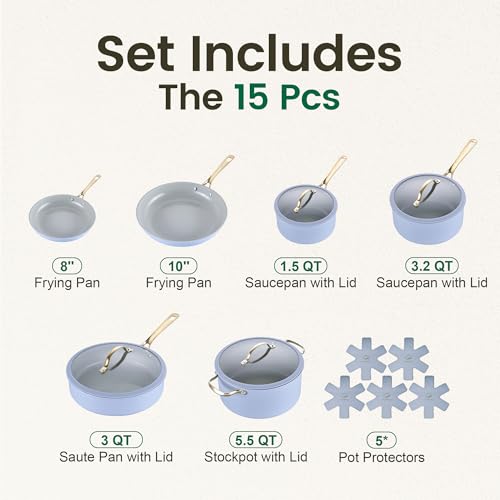
If you want the full landscape of options, our Best Ceramic Cookware Sets in 2026 guide breaks down sets by build quality and value. For most kitchens looking for one do-everything ceramic set, our current top pick is the Chef Power 15-Piece Ceramic Set, which covers the everyday range of pans most people actually use.
Where stainless steel shines
Stainless earns its keep the moment you want real browning and flavor:
- Searing meat. A properly preheated stainless pan delivers a deep, even crust ceramic generally can’t match.
- Fond and deglazing. Those browned bits stuck to the bottom are the foundation of pan sauces and gravies. You want them, and stainless gives them up beautifully when you add liquid.
- Acidic sauces. Tomato, wine, and citrus-based sauces are fine in stainless, which won’t degrade from acidity the way coated pans can over time.
- High heat and the oven. Crank it, broil it, finish a steak in the oven — stainless takes it.
- Decades of use. Toss it in the dishwasher, scrub it with anything, and it keeps going.
The learning curve nobody mentions
Stainless has a real catch: food sticks if you rush it. The fix is technique, not a better pan. Preheat the empty pan for a minute or two, add your fat and let it shimmer, then add food and leave it alone. A proper sear releases itself from the metal when it’s ready — if it’s stuck, it usually just isn’t done browning yet. Once this clicks, stainless stops being intimidating. But there’s no pretending it’s as plug-and-play as ceramic, and you will use more oil or butter.
Ceramic has its own rules, in the other direction. To make the coating last, treat it gently: cook on low to medium heat (high heat shortens its life fast), use wood, silicone, or nylon utensils instead of metal, and skip aerosol cooking sprays — the propellants leave a residue that builds up and ruins the nonstick. Hand-washing is kinder than the dishwasher, even if a pan claims to be dishwasher-safe.
Care and cleanup, head to head
- Daily cleaning: Ceramic wins for ease — usually a quick wipe. Stainless takes more elbow grease, though stuck-on food lifts easily after a short simmer with water.
- Dishwasher: Stainless is genuinely dishwasher-proof; ceramic lasts longer if you hand-wash.
- Utensils: Stainless takes metal; ceramic does not.
- Heat: Stainless loves high heat; ceramic needs you to keep it low to medium.
- Lifespan: Stainless can outlive you; ceramic is a periodic-replacement item.
Don’t forget induction
If you cook on an induction cooktop, the pan needs a magnetic base. Most stainless steel is induction-ready, but it’s worth a quick check (a fridge magnet sticking to the bottom is a good sign). With ceramic sets, induction compatibility varies more — some are built for it and some aren’t, so confirm the set explicitly lists induction support before you buy.
The verdict: most kitchens want both
Here’s the honest conclusion after weighing it all: this doesn’t have to be either/or, and the happiest kitchens usually aren’t. A single good stainless skillet plus a ceramic set covers nearly everything. The stainless handles searing, sauces, and anything that needs flavor and muscle; the ceramic handles eggs, fish, and fast cleanup. Buy one of each and you stop fighting your pans.
If you must choose one, pick by how you cook:
- Eggs, fish, low-fat cooking, beginners, or you just hate scrubbing → go ceramic.
- Steaks and chops, pan sauces, acidic dishes, high-heat cooking, or “buy it for life” → go stainless.
- You cook a bit of everything → start with a stainless skillet and a small ceramic set, and you’ll rarely reach for anything else.
Neither material is a miracle and neither is a mistake. Match the tool to the task and the choice gets easy.
Affiliate note: if you buy through links here we may earn a small commission, at no extra cost to you. It never changes our picks.
Leave a Reply