
Ceramic nonstick is one of the easiest cookware surfaces to keep clean, right up until the day you treat it like cast iron or scrub it like a crusty roasting tray. Do that a few times and the slick release you paid for starts to fade. The good news: knowing how to clean ceramic pans properly is mostly about restraint. Be gentle, skip the abrasives, and a decent ceramic pan will keep food sliding off for years. Here’s the practical, step-by-step version, plus what “seasoning” actually means for ceramic (spoiler: it’s not what you think) and when a pan is simply done.
Everyday cleaning: the simple routine
Most of the time, cleaning a ceramic pan takes about a minute. The only real rule is to slow down between cooking and washing.
- Let it cool a bit first. Don’t dunk a screaming-hot pan into cold water. That thermal shock can warp the base and crack the coating over time. Give it five or ten minutes to come down from blazing to just warm.
- Use warm water and a little mild dish soap. A soft sponge or dishcloth is all you need. The whole point of ceramic is that food doesn’t bond to it, so you rarely have to work hard.
- Wipe, rinse, and dry. Dry it with a soft towel rather than letting it air-dry with water spots. A dry pan stored properly lasts longer.
That’s genuinely it for normal use. If you’re reaching for anything stronger on a daily basis, the pan (or your heat level) is probably the issue, not the cleaning method.
Removing stuck or burnt-on food without abrasives
Sooner or later something cooks on too hard, eggs weld themselves to the surface, or a sauce scorches. The instinct is to grab a scouring pad. Don’t. The fix here is heat and patience, not muscle.
- Simmer and wipe. Add enough warm water to cover the stuck-on area and bring it to a gentle simmer for a few minutes. The steam and heat loosen whatever’s bonded to the surface. Then pour it off and wipe with a soft sponge — the residue usually lifts right away.
- Add a little baking soda. For tougher messes, stir a teaspoon or two of baking soda into that simmering water. It’s mildly alkaline and helps break down cooked-on grease and food without scratching anything. Simmer, cool slightly, then wipe.
- Use a wooden or silicone tool to nudge, not scrape. If a bit clings on, a soft spatula edge helps. Never a knife, fork, or metal scraper.
The key mindset: you’re dissolving and softening the mess so it wipes off, not grinding it off. Grinding is what kills the coating.
Discoloration, white haze, and lost slip
Three common problems show up after a few months of use, and each has a gentle fix.
White haze or chalky film: This is usually mineral buildup from hard water or detergent residue. Make a paste of baking soda and a little water, spread it on, let it sit a few minutes, then rub gently with a soft sponge and rinse thoroughly. Alternatively, wipe the cooled pan with a cloth dampened in a mix of equal parts white vinegar and water, then rinse very well. Vinegar is mildly acidic, so use it occasionally, not as a daily habit.
Brown or yellow discoloration: Often this is baked-on oil residue rather than damage to the coating itself. The baking-soda paste works here too. The biggest culprit is aerosol cooking spray, which leaves a sticky lacquer that builds up invisibly and eventually feels like the pan “stopped working.” If you’ve been spraying, that gummy layer is probably your real problem.
Lost slip / food suddenly sticking: Before you assume the coating is shot, deep-clean it. Wash with warm soapy water, then do a baking-soda-paste pass to strip off any oil residue. Dry it completely. A lot of “dead” ceramic pans are just dirty pans wearing an invisible film.
Does ceramic need seasoning? How to lightly condition it
Here’s the honest answer: ceramic does not need seasoning the way cast iron does. There’s no polymerized layer to build up, and you don’t need to do anything before first use beyond a quick wash. The nonstick property is baked into the coating itself.
That said, a light conditioning can refresh the release, especially after a thorough cleaning. To do it:
- Make sure the pan is clean and completely dry.
- Put a few drops of a neutral oil (canola, vegetable, or grapeseed) on a paper towel.
- Rub a thin film over the cooking surface, then take a clean paper towel and wipe off the excess. You want a barely-there sheen, not a puddle.
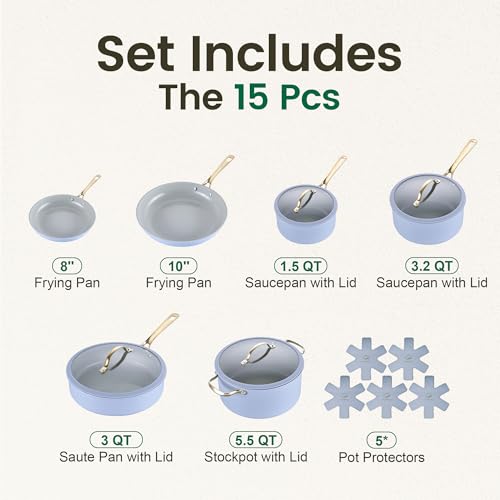
That’s it — no baking it in like cast iron. Do this occasionally, not after every wash, since the whole reason to avoid excess oil is that it’s what gunks up over time. If you want a deeper rundown of which sets hold their release the longest, our Best Ceramic Cookware Sets in 2026 guide breaks down the contenders, and our current top pick, the Chef Power 15-Piece Ceramic Set, has held up well to exactly this kind of low-fuss care.
The hard DON’T list
Almost every “my ceramic pan died fast” story traces back to one of these. Avoid them and you’ll roughly double a pan’s useful life.
- No steel wool or scouring pads. They leave micro-scratches that destroy the slip.
- No abrasive powders or gritty cleansers. Same problem — they grind the coating down.
- No metal utensils. Stick to wood, silicone, or nylon while cooking and cleaning.
- No aerosol cooking spray. The residue bakes into a sticky film that ruins release. Use a small amount of regular oil or butter instead.
- No routine dishwasher. Even “dishwasher-safe” ceramic ages faster with harsh detergents and high heat. Hand-washing wins if you want maximum lifespan.
When cleaning won’t fix it — time to replace
Sometimes a pan really is finished, and no amount of baking soda will bring it back. Replace it when:
- The coating is visibly chipped, flaking, or peeling. Once the surface breaks down, you don’t want bits ending up in your food, and the bare spots will stick no matter what.
- Food sticks badly even after a thorough deep-clean and light oil conditioning.
- The surface is deeply scratched or scored down to a different layer.
Ceramic coatings are wear items by nature — even well-treated, most last a few years before release fades, which is normal rather than a defect. But the difference between two years and five or six comes almost entirely down to gentle washing and skipping the abrasives. Treat the surface kindly, deep-clean it when it gets hazy, condition it lightly now and then, and your ceramic pans will earn their keep.
Affiliate note: if you buy through links here we may earn a small commission, at no extra cost to you. It never changes our picks.
Leave a Reply